In today's world where electronic devices are increasingly becoming thin, flexible, and high-density integrated, flexible circuit boards play an irreplaceable role. However, the high flexibility also brings specific challenges: parts that require installation of components, resistance to external mechanical forces, or precise assembly precisely require stability and robustness. The reinforcement board is a key component born to solve this contradiction. It is like giving a partial "skeleton" to flexible circuits, providing a solid backing where strength and support are needed, and is the behind the scenes contributor to ensuring product reliability and durability.
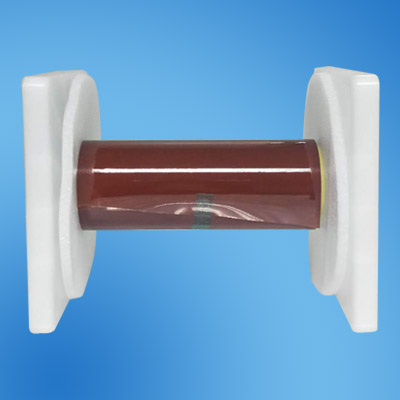
Strengthening the board, its core mission can be understood from its name - strengthening and consolidating. It is a hard material sheet that is precisely bonded to a specific area of a flexible circuit board. Its main purpose is not to make electrical connections, but purely to provide mechanical support and structural reinforcement. We can imagine it as a bridge pier built on soft soil, providing a stable foundation for the bridge (connector or chip) above, ensuring that the overall structure does not collapse when facing pressure.
Its performance and function are specifically reflected in the following crucial aspects:
Firstly, the fundamental function is to provide local rigid support to prevent harmful bending and damage. Flexible circuit boards themselves are made of soft materials, and under connectors that require frequent insertion and removal, or in areas where heavy chips are installed, without additional support, they are very prone to excessive bending when subjected to external forces. This kind of bending can cause fatigue fracture of the copper foil circuit inside, or cracking of the solder joints, resulting in long-term damage. The reinforcing plate builds a sturdy platform here, effectively dispersing and bearing external stresses such as insertion and extraction, pressing, etc., thus protecting the fragile circuit below. For example, in smartphones, we can always find its presence at the ribbon connector that connects the screen to the motherboard, ensuring that every insertion and removal during assembly and maintenance is safe and sound.
Secondly, reinforcing plates can ensure the flatness of assembly and achieve precise spatial positioning. The internal space of modern electronic devices is very compact, which can be called a "millimeter race". The three-dimensional shape and thickness of each component must be precisely controlled. The reinforcing plate, through its own thickness, can accurately fill the gap between the flexible circuit board and the device casing, avoiding wrinkles or unnecessary friction and interference with other components such as batteries and metal brackets due to looseness. In components with strict precision requirements such as camera modules, the reinforcing plate can ensure that the flexible circuit below always remains on the designed plane, thereby ensuring the accuracy of the optical path.
Thirdly, it can enhance the mechanical strength of specific points and provide reliable attachment points for fixed components. When a flexible circuit board needs to be attached to the housing with screws, its soft material cannot withstand the huge compression and shear forces generated when the screws are tightened. At this point, the reinforcement plate installed below the screw hole provides a solid anchor point, allowing the screw to firmly bite without tearing the circuit board under force. Similarly, reinforcement is often required around the positioning holes used for SMT surface mount processing to prevent them from being worn or pulled by positioning pins during automated production processes.
In addition, the reinforcing plate also plays a role in assisting heat dissipation. When choosing metals such as aluminum or copper as reinforcement materials, it is no longer just a structural component, but also a miniature heat sink. These metals are good conductors of heat, capable of quickly conducting the heat generated by power components (such as LED chips, driver chips, etc.) on flexible circuit boards during operation, and spreading it to a larger surface area, effectively reducing the temperature in the core area, improving the stability of component operation and the overall service life of the product.
It can also optimize production processes and improve the quality of mounting. On fully automated surface mount production lines, completely soft circuit boards are difficult to firmly clamp and accurately transfer, which can easily lead to component mounting deviations. Installing a reinforcing plate on the back of the area where components need to be soldered can make the local area stiff, allowing it to run smoothly on the SMT equipment's guide rail like a standard hard circuit board. This greatly improves the efficiency of surface mount processing and the yield of soldering.
When selecting reinforcement plates, engineers will choose different materials according to different needs. The commonly used is epoxy glass cloth board, which has good rigidity and cost advantages. When encountering parts that need to withstand high welding temperatures or still need to maintain some flexibility, heat-resistant polyimide materials become a choice. When the design also faces the challenge of heat dissipation, lightweight and thermally conductive aluminum materials stand out; If a certain part needs to withstand very large external forces or frequent insertion and extraction, high-strength stainless steel can provide reliable protection.
In summary, although the reinforcing plate is a seemingly simple auxiliary component, it perfectly embodies the engineering wisdom of "combining rigidity and flexibility" in modern electronic design. It cleverly compensates for the inherent shortcomings of flexible circuit materials through precise local reinforcement, enabling it to maintain overall flexibility while possessing strong capabilities to cope with complex assembly environments, mechanical stress, and heat dissipation challenges. From the foldable screen phones in our pockets to the flexible curved displays on the streets, their stable operation relies on the silent support of these 'strong backing'.




